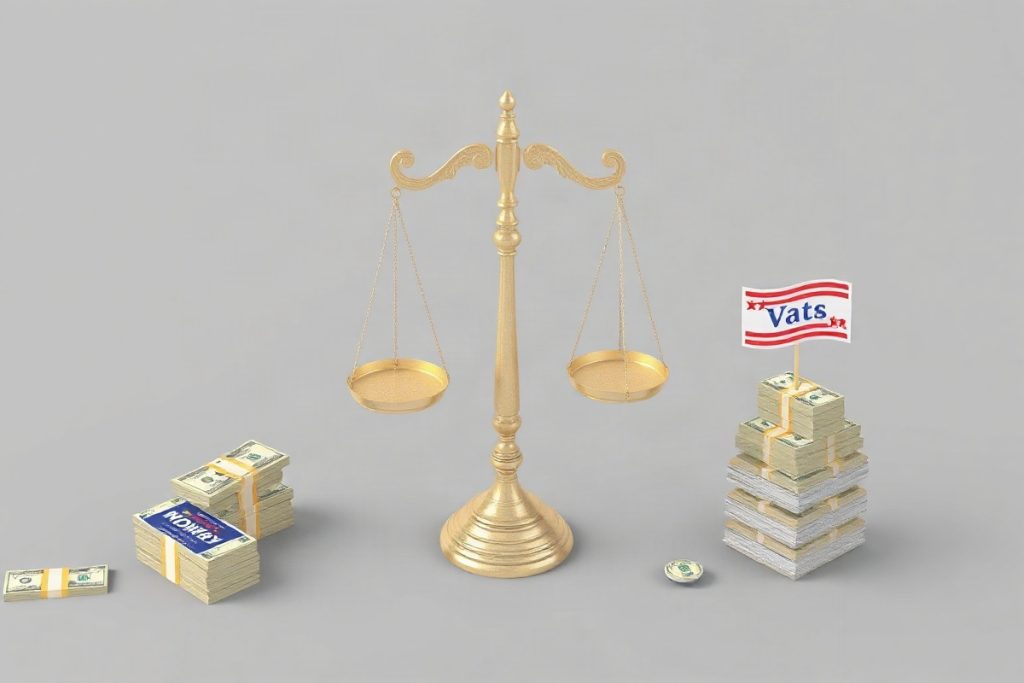
The intricate relationship between the Supreme Court and campaign finance has become increasingly pivotal in shaping the electoral landscape in 2026. As political campaigns evolve, the influence of judicial decisions on the flow of money into elections has sparked intense debate among lawmakers, candidates, and the public alike. From landmark rulings that have expanded the role of Super PACs to those that have championed transparency in donations, the Court’s interpretations of the First Amendment continue to redefine the boundaries of political contributions and spending.
This article delves into the impact of Supreme Court rulings on campaign finance, exploring how these decisions have transformed the strategies candidates employ and the dynamics of voter engagement. By examining recent cases and their implications, we aim to answer the critical question: how do Supreme Court decisions shape the financial landscape of elections, and what does this mean for the future of democracy in the United States?
Introduction: The Evolution of Campaign Finance
The landscape of campaign finance in the United States has undergone significant transformation over the decades, shaped by a series of pivotal legal rulings and legislative changes. From the early days of the 20th century, when the first regulations were introduced to curb corruption in political funding, to the current environment dominated by substantial contributions from wealthy individuals and organizations, the evolution of campaign finance reflects broader societal shifts regarding money in politics. The overarching goal of initial laws was to create a level playing field for candidates, ensuring that electoral outcomes were determined more by public support than by financial clout. However, the balance between free speech and the potential for corruption has been a contentious issue, leading to ongoing debates about the role of money in democracy.
Recent Supreme Court rulings have significantly altered the campaign finance landscape. The landmark decision in Citizens United v. FEC (2010) set the stage for unlimited spending by corporations and unions, fundamentally reshaping how campaigns are financed. This ruling was followed by others that have progressively loosened restrictions on campaign contributions and spending, culminating in a 2026 decision that struck down limits on political party expenditures in coordination with candidates. Critics of this latest ruling argue that it exacerbates the influence of wealthy donors and special interests, potentially drowning out the voices of average voters. Proponents assert that such financial support is a form of free speech, essential for candidates to communicate their messages effectively.
The implications of these rulings are profound, as they not only impact the strategies employed by candidates but also influence electoral outcomes. With the increasing ability for political parties to marshal significant financial resources, there is a growing concern that the electoral process may become skewed in favor of those with deep pockets. As parties become conduits for large donations, the potential for corruption and the erosion of public trust in the electoral system intensifies. In this context, understanding campaign finance is crucial for grasping the dynamics of American politics and the ongoing struggle to balance the principles of free expression with the integrity of the democratic process.
Key Supreme Court Rulings: A Timeline
The trajectory of campaign finance in the United States has been significantly influenced by key Supreme Court rulings over the years. One of the most pivotal cases, **Citizens United v. Federal Election Commission** in 2010, fundamentally shifted the landscape of political funding. This landmark decision determined that corporate spending on political campaigns constitutes a form of protected free speech under the First Amendment. As a result, corporations and unions were granted the ability to spend unlimited amounts on political advertisements and other forms of communication, leading to the rise of super PACs that could raise and spend money without limits, as long as they did not coordinate directly with candidates.
Building upon this precedent, the **McCutcheon v. FEC** ruling in 2014 further dismantled campaign finance constraints by striking down aggregate contribution limits that capped the total amount an individual could contribute to candidates, parties, and political committees. This decision was based on the argument that such limits infringed on free speech rights, allowing wealthier individuals to exert greater influence over the electoral process and political discourse. As a result, the ruling has been criticized for further entrenching the role of money in politics, raising concerns about the potential for corruption and the disproportionate influence of a small number of wealthy donors.
In 2026, the Supreme Court issued another significant ruling that eliminated restrictions on how much political parties can spend in coordination with candidates. This decision has the potential to amplify the influence of wealthy donors even further, as political parties can now act as conduits for large donations directed toward specific candidates. Critics argue that this ruling exacerbates the already notable imbalances in political funding, raising alarms about the implications for democratic processes and the voices of ordinary voters. The cumulative effect of these rulings illustrates a clear trend towards deregulation in campaign finance, fundamentally reshaping how elections are financed in the United States.
As these legal precedents continue to evolve, the ongoing debate over the role of money in politics remains a contentious issue, with advocates calling for reforms to restore balance and fairness in electoral competition. The implications of these Supreme Court decisions will likely reverberate through future elections, influencing the dynamics of campaigning and the overall integrity of the electoral process.
The 2026 Ruling: Implications for Political Parties
The Supreme Court’s 2026 ruling has significantly reshaped the landscape of campaign finance by striking down previous limits on political party spending in coordination with candidates. This decision, reached by a 6-3 vote, reflects an ongoing trend in the Court’s approach to campaign finance regulation, emphasizing a belief in free speech over restrictions on financial contributions. As a result, political parties are now positioned to become primary conduits for substantial contributions from wealthy donors, raising concerns about the potential ramifications for the integrity of electoral processes.
One of the most immediate implications of this ruling is the increased influence that affluent individuals and special interest groups can wield over political parties and their candidates. Without the previously enforced spending limits, parties can now more freely align their financial resources with the campaigns of individual candidates. This shift is likely to amplify the voices of those with deep pockets while marginalizing the concerns of average voters. Critics argue that this development could lead to an environment where political discourse is dominated by the preferences of a few, rather than reflecting the diverse interests of the electorate.
Moreover, the ruling has sparked intense debate about the potential for corruption within the political system. The absence of financial constraints raises alarm bells regarding the integrity of elections, as the influx of money may foster undue influence over candidates and public policy. Concerns about quid pro quo arrangements, where large donors expect favorable treatment in return for their contributions, are amplified in this new context. The ruling has led many to question whether the democratic process can remain fair and transparent when financial resources can so heavily dictate political outcomes.
As political parties adjust to this new reality, they face a critical choice: to embrace the financial influx while risking public trust or to seek alternative means of funding that prioritize grassroots support. The path they choose will not only shape their electoral strategies but also determine the future of campaign finance in the United States. The ongoing discourse surrounding this ruling underscores the delicate balance between free speech and the preservation of democratic integrity, a challenge that will undoubtedly influence the political landscape for years to come.
The Role of Super PACs and Dark Money
The rise of super PACs in the wake of the Supreme Court’s 2010 Citizens United v. FEC decision marked a significant shift in the landscape of campaign finance. This ruling allowed for unlimited independent expenditures by corporations and unions, which paved the way for the establishment of super PACs—political action committees that can raise and spend unlimited amounts of money, often without disclosing their donors. As these entities became a fixture of American political campaigns, they provided a mechanism for wealthy individuals and special interest groups to exert considerable influence over elections, often overshadowing the voices of average voters. This evolution has led to a political environment where campaign financing is increasingly dependent on the deep pockets of a few.
The impact of dark money—funds raised for political purposes by organizations that are not required to disclose their donors—has further complicated the quest for transparency in campaign finance. Dark money groups can spend freely to influence elections without revealing the sources of their funding, which raises concerns about accountability and the potential for corruption. As these contributions proliferate, the public’s ability to trace the flow of money in politics diminishes, undermining the integrity of the electoral process. Critics argue that this lack of transparency allows for undue influence from anonymous donors, thereby eroding trust in democratic institutions.
Recent Supreme Court rulings have only amplified the power of super PACs and dark money. A 2026 decision striking down limits on political party spending in coordination with candidates has effectively transformed political parties into conduits for wealthy donors. This ruling allows parties to channel even more resources into campaigns, further expanding the reach of super PACs and dark money groups. The implications of these rulings are profound, as they create additional avenues for special interests to dominate political discourse, often at the expense of the broader electorate. As the intersection of money and politics continues to evolve, the call for reform and greater transparency becomes more urgent, highlighting the need for a reassessment of the current campaign finance landscape.
Public Opinion and the Future of Campaign Finance
As the 2026 election cycle unfolds, public opinion on campaign finance reform remains a significant and contentious issue. Recent polling data indicates that a substantial majority of Americans express concern over the influence of money in politics. Many citizens believe that wealthy donors and special interests have an outsized impact on electoral outcomes, often drowning out the voices of average voters. This sentiment has been amplified by a series of Supreme Court rulings that have progressively loosened restrictions on campaign financing, most recently the June 2026 decision that struck down limitations on political party spending in coordination with candidates. Critics argue that this ruling further facilitates corruption and undermines the democratic process by allowing an influx of dark money to dominate political discourse.
The perception that big money is corrupting elections is not only prevalent but also bipartisan. Surveys reveal that voters from both major parties, as well as independents, are increasingly supportive of measures aimed at reforming campaign finance laws. Many Americans favor stricter regulations on political donations and greater transparency in how campaign funds are raised and spent. This widespread discontent suggests a fertile ground for potential legislative responses to curb the influence of money in politics. Lawmakers may feel pressured to address these concerns, particularly as public awareness grows regarding the implications of recent Supreme Court rulings.
In light of this evolving landscape, there is potential for a bipartisan push toward comprehensive campaign finance reform. Possible legislative measures could include establishing stricter limits on individual contributions, enhancing transparency requirements for political donations, and implementing public financing options for candidates. Advocacy groups and concerned citizens are likely to rally around these initiatives, seeking to restore a sense of equity and fairness to the electoral process. As the 2026 elections approach, the question remains whether lawmakers will heed the call for reform, or if the entrenched interests that benefit from the current system will continue to dominate. The future of campaign finance will undoubtedly shape not only the political dynamics of this election cycle but also the broader health of American democracy.
The Fight for Reform: Advocacy and Legislation
In the wake of recent Supreme Court rulings that have further deregulated campaign finance, advocacy groups focused on reform have intensified their efforts to counteract the growing influence of money in politics. Organizations such as Common Cause, the Campaign Legal Center, and Public Citizen have mobilized grassroots campaigns aimed at raising awareness about the implications of these decisions. They argue that the Supreme Court’s latest ruling, which allows political parties to spend unlimited funds in coordination with candidates, exacerbates the existing disparities in political influence between wealthy donors and average voters. These advocacy groups have been vocal in their belief that unchecked financial contributions can lead to corruption and diminish the integrity of democratic processes.
Legislative efforts to implement meaningful campaign finance reform have faced significant hurdles at both the federal and state levels. While some lawmakers have introduced bills aimed at restoring previous limits on campaign contributions and enhancing transparency, these proposals often struggle to gain traction in a polarized Congress. Additionally, the recent Supreme Court decisions have emboldened opponents of reform, who argue that the free speech implications of campaign contributions should not be curtailed. As a result, the landscape for federal reform remains fraught with challenges, with many advocates fearing that legislative inaction will allow the influence of money to continue to grow unchecked.
In response to the limitations at the federal level, several states have taken the initiative to enact their own campaign finance reforms. Some states have introduced measures such as public financing of campaigns, stricter contribution limits, and improved disclosure requirements for campaign donations. These state-level initiatives serve as a counterbalance to federal rulings, allowing local governments to assert control over their electoral processes and mitigate the impact of big money in politics. By creating a patchwork of regulations, advocates hope to foster an environment where candidates are less beholden to wealthy donors, potentially paving the way for a more equitable political landscape.
As the debate over campaign finance reform continues, the interplay between advocacy groups, legislative efforts, and state-level initiatives will be crucial in shaping the future of American democracy. The ongoing struggle highlights the importance of public engagement and awareness in addressing the challenges posed by the influence of money in politics.
International Perspectives on Campaign Finance
As the United States grapples with the implications of recent Supreme Court rulings that have further relaxed campaign finance regulations, it is essential to examine how American practices compare with those in other democracies. Many countries have adopted stricter campaign finance laws to mitigate the influence of money in politics, aiming to enhance democratic integrity. For instance, nations such as Canada, Germany, and the United Kingdom impose significant limits on individual contributions and require transparency in political donations. These regulations serve to level the playing field for candidates and curb the potential for corruption driven by wealthy donors.
Lessons from these countries highlight the importance of regulatory frameworks that prioritize public interest over private influence. In Canada, for instance, strict contribution limits and public funding for parties help ensure that elections reflect the will of the electorate rather than the financial clout of a few. Similarly, Germany’s transparency laws mandate that all donations above a certain threshold be disclosed, fostering accountability and trust in the electoral process. The UK also has robust regulations that limit campaign spending and establish clear guidelines for political advertising, demonstrating that stringent campaign finance laws can coexist with vibrant democratic practices.
The implications for U.S. democratic integrity in a global context are profound. With the Supreme Court’s recent decision allowing unlimited spending by political parties in coordination with candidates, the potential for increased influence from wealthy donors raises concerns about the erosion of public trust in elections. Critics argue that this trend mirrors practices in less transparent democracies, where money can overshadow the voices of ordinary citizens. As the U.S. continues to diverge from international norms regarding campaign finance, it risks compromising the fundamental principles of democracy, including equality and fairness.
In summary, while the U.S. Supreme Court has opened the floodgates to more money in politics, a closer look at other democracies reveals that stricter campaign finance regulations can foster healthier electoral environments. The lessons learned from these countries provide a valuable perspective as the United States navigates the complex intersection of money, politics, and democratic integrity.
Conclusion: The Path Forward
The recent Supreme Court ruling that lifted restrictions on political party spending in coordination with candidates marks another significant shift in the landscape of campaign finance. By allowing political parties to channel increased financial support from wealthy donors directly to candidates, this decision has the potential to amplify the influence of money in politics. Critics warn that this could undermine the integrity of our electoral processes, as the voices of everyday citizens may be drowned out by the interests of affluent individuals and special interest groups. The trend of loosening campaign finance regulations, which began with landmark decisions like Citizens United, has now reached a critical juncture, raising urgent questions about the future of democratic engagement in the United States.
As we navigate this evolving terrain, it is essential to foster an ongoing public discourse around campaign finance. Voter awareness and participation are crucial in addressing the implications of these rulings. Citizens must engage in conversations about the role of money in politics, advocate for transparency, and demand accountability from elected officials. Public sentiment can drive policymakers to reconsider the current framework and explore reforms that level the playing field for all candidates, regardless of their financial backing.
The responsibility lies not only with voters but also with policymakers who must respond to the growing concerns regarding campaign finance. They need to explore potential legislative measures that can help mitigate the risks associated with increased financial influence in elections. This includes considering options such as public financing of campaigns, stricter donation limits, or enhanced disclosure requirements for political contributions.
In conclusion, the impacts of recent Supreme Court rulings on campaign finance are profound and far-reaching. As we move forward, it is imperative that we remain vigilant and proactive in safeguarding the democratic principles that underpin our electoral system. By fostering dialogue, advocating for reform, and staying engaged, we can work together to ensure that our elections reflect the will of the people rather than the interests of a select few. The path forward demands our collective action and commitment to a more equitable political landscape.
Frequently asked questions
What was the significance of the 2026 Supreme Court ruling?
How does campaign finance affect elections?
What are super PACs?
Is there public support for campaign finance reform?
What can be done to reform campaign finance?
Key takeaways
- Recent Supreme Court decisions are reshaping campaign finance laws in significant ways.
- The 2026 ruling may lead to greater influence from wealthy donors in elections.
- Public opinion is largely in favor of reforming campaign finance to enhance electoral integrity.
- Super PACs and dark money play crucial roles in modern campaign financing.
- Legislative and advocacy efforts continue to push for reforms despite judicial setbacks.
Sources
Campaign Legal Center, Harvard Gazette, everycrsreport.com, SCOTUSblog, en.wikipedia.org