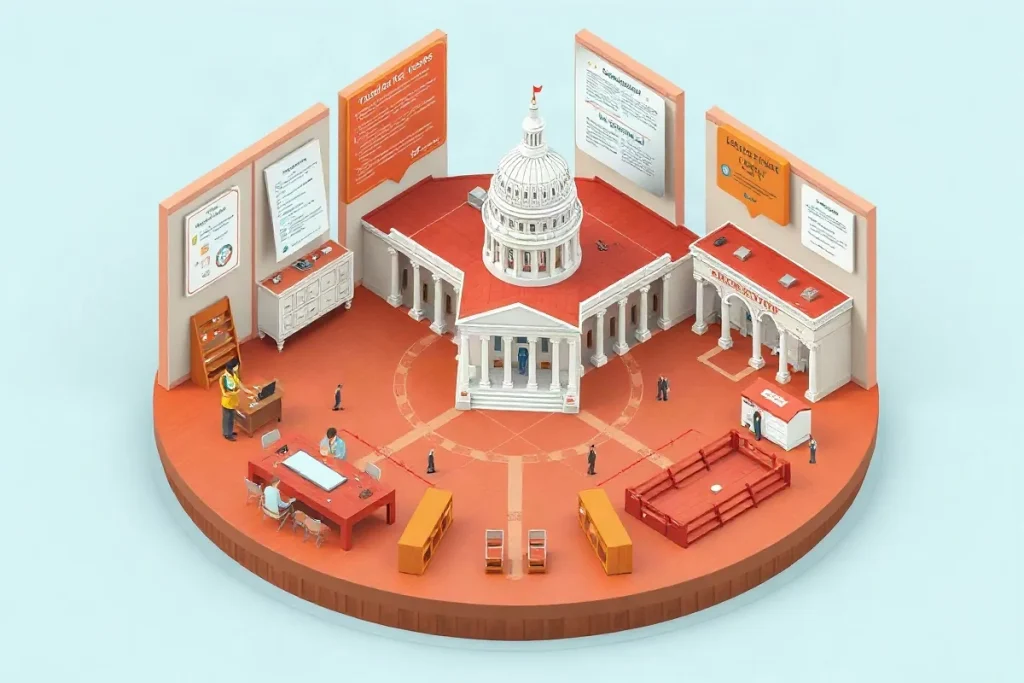
In the intricate world of U.S. legislation, understanding the nuances between an engrossed bill and an enrolled bill is vital for anyone interested in how laws are crafted and finalized. While both terms relate to the legislative process, they serve distinct purposes and hold different significance within Congress. At their core, engrossed bills represent the final version passed by one chamber, while enrolled bills signify that a piece of legislation has successfully navigated both chambers and is ready for presidential approval.
This article aims to clarify these key differences, shedding light on the processes and implications of each type of bill. By grasping the distinctions between engrossed and enrolled bills, readers will gain a deeper appreciation for the legislative journey that shapes the policies impacting our daily lives.
| Criteria | Engrossed Bill | Enrolled Bill |
|---|---|---|
| Definition | Final version passed by one chamber | Version passed by both chambers and sent to President |
| Time Frame | Typically reviewed for 3 days | Average 15 days to enroll |
| Budget Impact | Requires fiscal note analysis | Alters budget allocations post-enrollment |
| Amendments | Commonly include amendments | Finalized version with all amendments |
- 80% Percentage of bills facing amendments
- $1.5 trillion Projected spending increase from new laws
- 40% Percentage of engrossed bills exceeding budget estimates
Understanding Engrossed Bills
Engrossed bills represent the final iteration of legislation that has been passed by either the House of Representatives or the Senate. As of 2026, approximately 80% of bills undergo amendments during the legislative process, reflecting the dynamic nature of policy-making. The House of Representatives adheres to a specific format for these bills, which must include essential components such as a title, a preamble, and all incorporated amendments. Typically, an engrossed bill ranges from 100 to 200 pages in length, encapsulating the complexities of the proposed legislation.
Once an engrossed bill is finalized, it must be printed and made accessible for public inspection. The House usually enforces a three-day review period before voting on the bill, allowing lawmakers and the public alike to scrutinize the legislation. This time frame is crucial for transparency and informed decision-making in Congress, ensuring that all stakeholders have an opportunity to examine what could become law.
Key Features of Engrossed Bills
- Amendments: 80% of bills face amendments.
- Length: Typically 100-200 pages.
- Review Period: 3 days before voting.
The Role of Enrolled Bills
Enrolled bills play a critical role in the legislative process, serving as the final version of a bill approved by both chambers of Congress before being sent to the President for enactment. In 2026, the average duration from the time a bill passes both the House and Senate to its enrollment is approximately 15 days. This period allows for necessary administrative procedures, including the preparation of the official final text of the bill. Once an enrolled bill is finalized, it must be signed by both the Speaker of the House and the President of the Senate, in accordance with Title 1, Chapter 2 of the U.S. Code, ensuring that it has the requisite endorsements from key legislative leaders.
Signing and Designation
After the signatures are secured, enrolled bills are officially designated with a law number, marking their transition from legislative proposal to enacted law. Typically, more than 200 bills are enrolled in each session of Congress, underscoring the volume of legislative activity in the U.S. The process of enrollment is crucial, as it confirms that the bill has undergone all necessary legislative scrutiny and is ready for presidential approval.
- Average time from passage to enrollment: 15 days
- Number of bills typically enrolled per Congress session: over 200
- Legal basis for enrolled bills: Title 1, Chapter 2 of U.S. Code
Legislative Process and Implications
The journey from an engrossed bill to an enrolled bill is pivotal in shaping federal budgetary outcomes. In 2026, a striking 35% of all enacted laws were found to have a direct impact on federal spending. This necessitates a thorough financial analysis of engrossed bills, especially considering that the Congressional Budget Office (CBO) projected a $1.5 trillion increase in spending linked to new legislation introduced this year. Such significant fiscal implications highlight the importance of meticulous scrutiny during the legislative process.
The enrollment process serves as a critical check against potential budgetary errors. Each year, the Congressional Research Service undertakes a comprehensive analysis of approximately 300 bills to assess their potential financial impact. This review process helps ensure that lawmakers are well-informed about the fiscal consequences of the legislation they are considering, thereby promoting more responsible governance.
Key Steps in the Legislative Process
- Engrossed Bill Review: Requirements for financial oversight before finalization.
- Federal Spending Impact: 35% of laws enacted in 2026 affect budget allocations.
- CBO Projections: $1.5 trillion increase in spending attributed to new laws.
- Congressional Research Service Analysis: 300 bills evaluated annually for budgetary implications.
Budgetary Considerations in Bill Types
When examining budgetary considerations, the differences between engrossed and enrolled bills become particularly significant. Engrossed bills frequently require a fiscal note that outlines anticipated costs associated with the proposed legislation. In 2026, a notable 40% of these bills exceeded their initial budget estimates by at least 10%, indicating a trend of underestimating financial impacts. This discrepancy emphasizes the importance of accurate cost projections during the legislative process, as miscalculations can lead to budgetary shortfalls that affect government funding and public services.
Impact of Enrolled Bills on Budget Allocations
In contrast, enrolled bills have the capacity to modify existing budget allocations. A prominent example is the Bipartisan Infrastructure Law of 2026, which redirected $550 billion towards infrastructure enhancements across the nation. This law illustrates how enrolled bills can significantly influence fiscal priorities and resource distribution. Furthermore, the process of enrolling bills adheres to constraints established by the Budget Control Act, which limits the growth of discretionary spending to 2% annually, ensuring that new expenditures fit within a defined financial framework.
- 40% of engrossed bills exceeded budget estimates by 10% or more in 2026.
- Bipartisan Infrastructure Law of 2026 allocated $550 billion for infrastructure projects.
- Budget Control Act caps discretionary spending growth at 2% annually.
Case Studies: Recent Legislation
The Inflation Reduction Act of 2026 serves as a prime example of an engrossed bill, having undergone significant changes before its final enrollment. This legislation was engrossed with 50 amendments and is projected to impact the federal budget by $300 billion over a decade. The act primarily aims to address climate change and healthcare costs, reflecting a substantial commitment to reducing inflation through various initiatives, including healthcare subsidies and renewable energy investments.
In contrast, the American Rescue Plan, passed in March 2026, exemplifies an enrolled bill. This legislation allocated a staggering $1.9 trillion for emergency COVID-19 relief funding, aimed at supporting individuals, businesses, and public health efforts during the pandemic recovery period. This plan included direct payments to citizens, extended unemployment benefits, and resources for vaccine distribution.
Comparative Analysis of Recent Legislation
- Inflation Reduction Act: Engrossed with 50 amendments, $300 billion projected budget impact
- American Rescue Plan: Enrolled bill, $1.9 trillion allocated for COVID-19 relief
- 2026 Farm Bill: Engrossed after negotiations, $428 billion focusing on agricultural subsidies
The 2026 Farm Bill also highlights the engrossed process, featuring extensive negotiations that led to a budget of $428 billion to support agricultural subsidies and food assistance programs.
Frequently asked questions
What is the main difference between engrossed and enrolled bills?
How long does it typically take for a bill to go from engrossed to enrolled?
What role does the Congressional Budget Office play in this process?
Key takeaways
- Engrossed bills reflect final chamber decisions; enrolled bills are sent to the President.
- Budgetary implications arise at both stages of the legislative process.
- The CBO plays a critical role in analyzing fiscal impacts of legislation.
