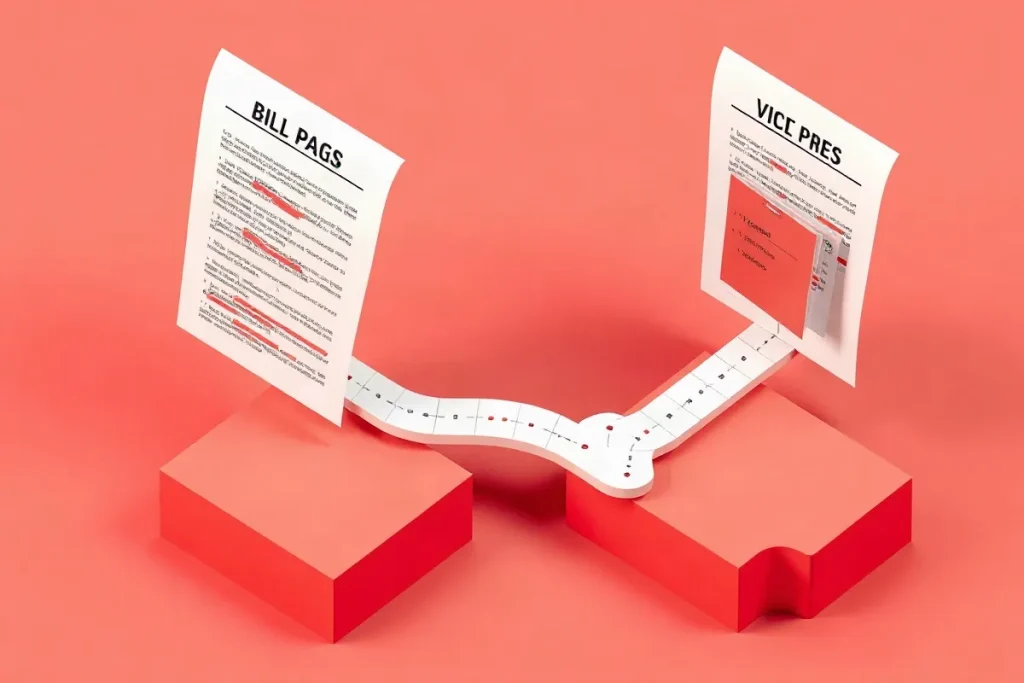
Congress shapes bills through a sequence of committee review, debate and votes that can revise, advance or stop a proposal. The process—often called regular order—gives lawmakers opportunities to examine legislation and negotiate its terms before it can become law.
That sequence matters because a bill’s path is shaped not only by its policy goals but also by who controls each procedural step. Understanding regular order helps explain how Congress turns proposals into legislation—and why the route can be contested, delayed or bypassed.
| Stage | Purpose | What it does not do |
|---|---|---|
| Hearing | Examines a bill or policy issue | Does not itself amend or pass the bill |
| Markup | Lets committee members debate and consider amendments | Does not enact the bill |
| Committee report | Forwards a measure for possible chamber consideration | Does not guarantee a floor vote |
| Floor consideration | Allows the chamber to debate and act under its rules | Does not resolve House-Senate differences automatically |
- 2 chambers Congress consists of the House of Representatives and the Senate, which have distinct procedures.
- 3 customary stages The process traced here: committee hearings, markup and floor consideration.
- 0 automatic enactments A committee report does not itself enact a bill.
What does regular order mean for a bill?
Regular order is Congress’s customary process for developing and considering legislation, not a single rule requiring every bill to follow identical stages. In the usual committee route, a bill goes to a committee with jurisdiction before the House or Senate considers it; the route can vary because the two chambers use different procedures.
Committee work and chamber action
In both the House and Senate, a committee may hold hearings to examine a bill or a policy issue. Hearings gather information and allow discussion; they are separate from markup, when committee members consider and may amend the bill’s legislative text.
Committee consideration alone does not enact a bill. After committee action, the relevant chamber must take further steps, and House and Senate procedures differ; regular order describes the customary process rather than guaranteeing that every bill reaches the floor or becomes law.
How do hearings and markup change a bill?
Hearings examine
Congressional hearings let committee members question witnesses and examine the issues a proposal addresses; markup is the later stage where members debate and may amend the bill’s text. A hearing helps members assess what a proposal is meant to address before deciding what language to advance, but it does not itself change that language.
- House committees: Their work proceeds under House rules.
- Senate committees: Their work proceeds under Senate rules.
Those distinct rule systems still apply as committees consider legislation: committee review does not make House and Senate procedure interchangeable.
Markup revises
At markup, committee members debate provisions and may offer amendments to the measure. The committee can then vote on whether to report the bill to the full chamber; that vote is a decision about advancing the measure, not a guarantee that the full chamber will approve it.
For budget and spending legislation, the distinction is especially important: examining a proposal at a hearing and changing its legislative language during markup are separate procedural acts. A hearing can clarify the issues under consideration, while markup is where committee members can propose changes to the text before the committee decides whether to report the measure.
What happens after a committee reports a bill?
A committee report sends a bill forward for possible consideration by the full House or Senate, but it does not automatically put the bill on the floor or guarantee a vote. The next step depends on which chamber is acting and the procedures that chamber uses.
Different chambers, different floor paths
In the House, floor consideration proceeds under House rules; in the Senate, it proceeds under Senate rules. Those procedures can shape when members debate a bill, how long debate lasts and whether amendments may be offered, so committee action does not create one identical route through both chambers.
Once a bill reaches the floor, members consider it under the rules governing that debate, including any limits on discussion or amendments. Passage by one chamber is not necessarily the end of the process: if the House and Senate pass different versions, further action is needed to resolve those differences before a measure can go to the president.
What changes when Congress bypasses committee stages?
When Congress bypasses committee stages, a chamber can bring a bill forward without its customary committee route, but the procedure available depends on that chamber’s rules and the measure. The change can reduce opportunities for scrutiny before floor consideration, rather than remove the chamber’s power to act.
Skipping a hearing can mean fewer formal chances for members of the public to testify and for committee members to question witnesses before the bill reaches the floor. Bypassing markup can also leave less committee-level time to debate amendments and revise the text before the full chamber considers it.
Separate chambers, separate versions
A faster route does not make the House and Senate procedures identical: each chamber acts under its own rules, and the route available for a measure can differ. If the House and Senate pass different versions, Congress still has to resolve those differences before a final bill can proceed.
What are the limits and trade-offs of regular order?
Regular order makes congressional scrutiny more visible, but it cannot guarantee agreement, floor consideration or enactment. A hearing and a markup—the committee’s process for considering and amending a bill—show stages of review, not proof that members will support the proposal or that it will advance.
Process is not a promise of passage
Committee jurisdiction can complicate a bill’s route: a proposal touching subjects assigned to different committees may need consideration by more than one panel. That makes the path less direct than a single hearing followed by a floor vote.
A committee vote is not enactment. A bill reported by a committee still requires action by its chamber; if House and Senate versions differ, the differences must also be resolved before the measure can proceed. Bypassing committees does not erase procedure, either: House and Senate rules continue to govern how legislation is considered.
- Committee review: A hearing or markup offers scrutiny, but does not ensure agreement or advancement.
- Reported bill: Committee approval is a step, not final passage; chamber action remains necessary.
- Different House and Senate texts: Their differences must be resolved.
- Committee bypass: The chamber’s rules still apply.
Frequently asked questions
Is regular order required for every bill?
What is the difference between a hearing and a markup?
Does a committee vote pass a bill into law?
What is lost when a bill skips markup?
Key takeaways
- Hearings examine policy; markup considers and may change bill text.
- A committee report is not a floor vote or enactment.
- House and Senate rules shape distinct routes to chamber consideration.
- Bypassing committee stages can reduce committee-level scrutiny without removing chamber rules.
