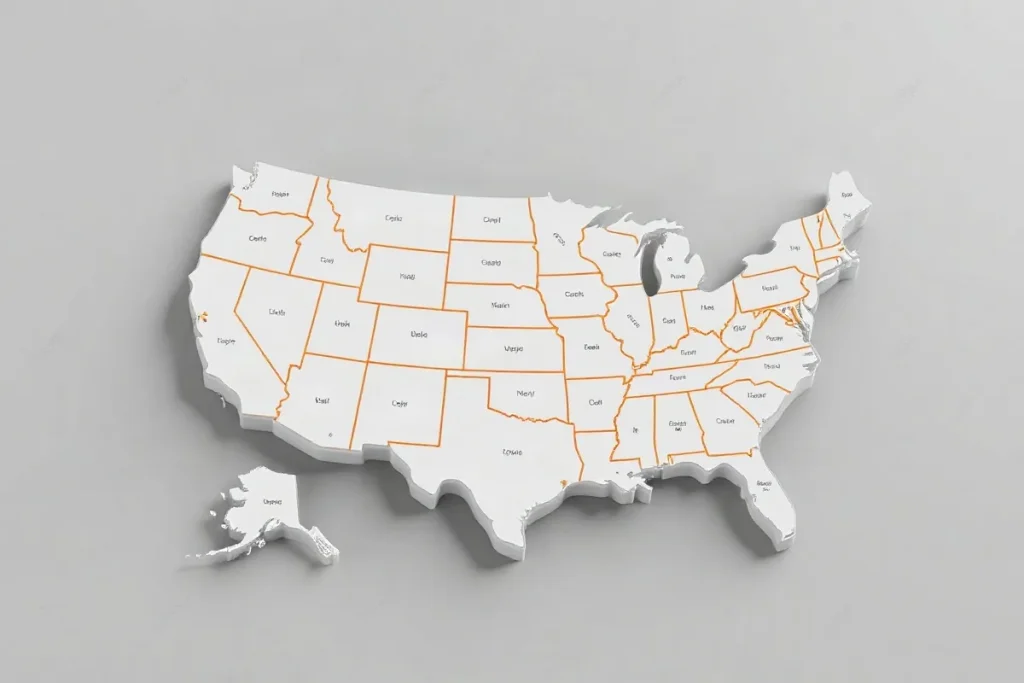
As the 2026 elections approach, the redistricting process is reshaping the political landscape in ways that could significantly impact representation across the United States. This practice, which occurs every ten years following the census, involves redrawing the boundaries of electoral districts to reflect population changes. While it might seem like a technical exercise, the implications of redistricting are profound, influencing which voices are heard in Congress and state legislatures, and ultimately determining the balance of power in American politics.
Understanding what redistricting means for political representation is crucial for voters who want to grasp how their electoral power is being shaped. The stakes are high; district maps can be drawn to either enhance fairness and competitiveness or, conversely, to entrench partisan advantage. In an era marked by heightened political polarization, the outcomes of redistricting will play a pivotal role in shaping the future of governance, policy priorities, and the very nature of democracy itself.
| State | Redistricting Method | Gerrymandering Restrictions |
|---|---|---|
| California | Independent Commission | Strong |
| Texas | Legislative Control | Weak |
| Michigan | Independent Commission | Moderate |
| North Carolina | Legislative Control | Weak |
| Virginia | Independent Commission | Moderate |
- 7.4% Population increase from 2010 to 2020
- 435 Total congressional districts in the U.S.
- 12 Seats gained by Democrats in 2022 elections
- 3-4 Projected seats gained by GOP in North Carolina by 2024
- 14 States using independent commissions for redistricting as of 2026
Understanding Redistricting
Redistricting is a critical process in U.S. politics, taking place every decade following the national census. The most recent census occurred in 2020, revealing a population increase of 7.4% from 2010. This growth resulted in states needing to adjust their congressional district maps to ensure fair representation. In 2021 alone, more than 40 states engaged in redistricting, impacting the 435 congressional districts across the nation. These changes reflect shifts in population density, migration patterns, and demographic trends, all of which can significantly reshape the political landscape.
Impact of Redistricting on Representation
The adjustments made during redistricting can lead to substantial shifts in political power. For instance, states like Texas gained two additional congressional seats due to their growing population, while states such as California lost one seat as their population growth stagnated. As districts are redrawn, the lines can favor one political party over another, leading to gerrymandering, where district boundaries are manipulated to create an electoral advantage.
- Population change: 7.4% increase (2010-2020)
- New congressional seats: 2 additional seats in Texas
- Lost congressional seats: 1 seat lost in California
Impact on Electoral Outcomes
Gerrymandering and Its Effects
The strategic manipulation of electoral district boundaries, known as gerrymandering, has significant implications for political representation in the United States. In the 2022 elections, Democrats capitalized on favorable redistricting efforts in states like Illinois, gaining 12 seats in the House of Representatives. This success highlights how redistricting can be employed as a tactical advantage, influencing the balance of power in Congress. Conversely, in North Carolina, the Republican-controlled legislature implemented new maps in 2021, with projections indicating a potential gain of 3 to 4 GOP seats by 2024, underscoring how gerrymandering can solidify partisan dominance.
Research has shown that partisan gerrymandering can distort election outcomes, with a 2020 analysis revealing that such practices could skew results by as much as 7%. This significant impact raises concerns about the fairness of elections and the principle of equitable representation. As states continue to engage in redistricting based on demographic shifts and political strategies, the consequences for electoral outcomes remain profound.
- Illinois (2022): Democrats gained 12 House seats due to strategic redistricting.
- North Carolina (2021): GOP redistricting projected to yield 3-4 additional seats by 2024.
- 2020 Analysis: Partisan gerrymandering can skew election results by 7%.
Legal Challenges and Reforms
The landscape of redistricting in the United States has been significantly shaped by legal challenges and reforms, especially following the Supreme Court’s 2019 ruling in Rucho v. Common Cause. This decision established that claims of partisan gerrymandering are non-justiciable, meaning federal courts cannot intervene in disputes regarding the fairness of electoral maps based on partisan considerations. As a result, many states have faced limited judicial recourse to challenge gerrymandered districts, thereby impacting future lawsuits and potentially entrenching partisan biases in the electoral process.
Independent Redistricting Commissions
In contrast to this legal backdrop, reforms like California’s Proposition 11, enacted in 2008, have paved the way for more impartial redistricting practices. By establishing an independent commission to oversee the drawing of electoral maps, California has been praised for its effectiveness in reducing partisan bias. As of 2026, 14 states have adopted similar independent commissions for redistricting, a notable increase from only three states in 2000. This shift indicates a growing trend toward transparency and fairness in how electoral districts are determined.
- States with independent commissions: 14 states as of 2026
- States with partisan-controlled redistricting: 36 states as of 2026
- California’s Proposition 11 passage date: 2008
- Supreme Court ruling on partisan gerrymandering: Rucho v. Common Cause, 2019
Local Representation and Community Impact
The impact of redistricting on local representation can be profound, as illustrated by recent changes in Texas and Virginia. In 2021, Texas gained two additional congressional seats due to population growth, particularly in urban areas like Houston, which saw an influx of residents from diverse backgrounds. This shift not only altered the political landscape but also highlighted the need for tailored representation to address the unique challenges faced by these communities. With a population increase of approximately 1.3 million since 2010, Houston’s demographic changes necessitate a focused approach to issues like housing, education, and healthcare.
Community Advocacy and Minority Representation
In Virginia, redistricting resulted in the displacement of nearly 200,000 residents into new congressional districts, significantly changing the dynamics of representation in the 2022 elections. Communities affected by this change raised concerns about their voices being diluted. Conversely, in Arizona, community groups successfully advocated for the preservation of majority-minority districts, which directly impacts over 1.5 million residents. This effort underscores the importance of maintaining districts that reflect the population’s diversity, ensuring that all voices are heard in the political process.
- Texas gained two congressional seats in 2021
- Virginia shifted nearly 200,000 residents into new districts
- Arizona’s advocacy preserved majority-minority districts for 1.5 million residents
Future Trends in Redistricting
As the 2026 elections approach, significant changes in redistricting practices are becoming evident across the United States. Following court rulings aimed at curbing gerrymandering, seven states will implement new congressional maps, notably including Michigan and New York. These states are responding to legal mandates by adopting stricter criteria that prioritize district compactness and community integrity. For instance, Michigan’s new redistricting standards require that districts maintain a compactness score of at least 0.3 on a scale where 1.0 represents a perfect circle, promoting fairer representation.
Technological Influences on Redistricting
Advancements in data analytics and mapping technologies are also reshaping redistricting strategies. Tools such as Maptitude, which costs approximately $1,500 annually, allow state legislators and advocacy groups to analyze demographic data with precision. These technologies enable the identification of favorable district configurations, increasing transparency in the redistricting process. As a result, states are increasingly reliant on sophisticated data models to create districts that reflect the true political landscape.
- Compactness Score: Michigan mandates a minimum score of 0.3.
- Annual Cost of Mapping Software: Maptitude priced at around $1,500.
- States with New Maps: Seven states will implement changes for 2026.
Frequently asked questions
What is redistricting?
How does redistricting affect electoral outcomes?
What legal reforms have been made regarding redistricting?
Key takeaways
- Redistricting occurs every decade post-Census.
- Gerrymandering can skew election outcomes by up to 7%.
- Independent commissions have increased to 14 states since 2000.
- Local communities can lose representation through redistricting.
- Technological advancements are shaping future redistricting strategies.