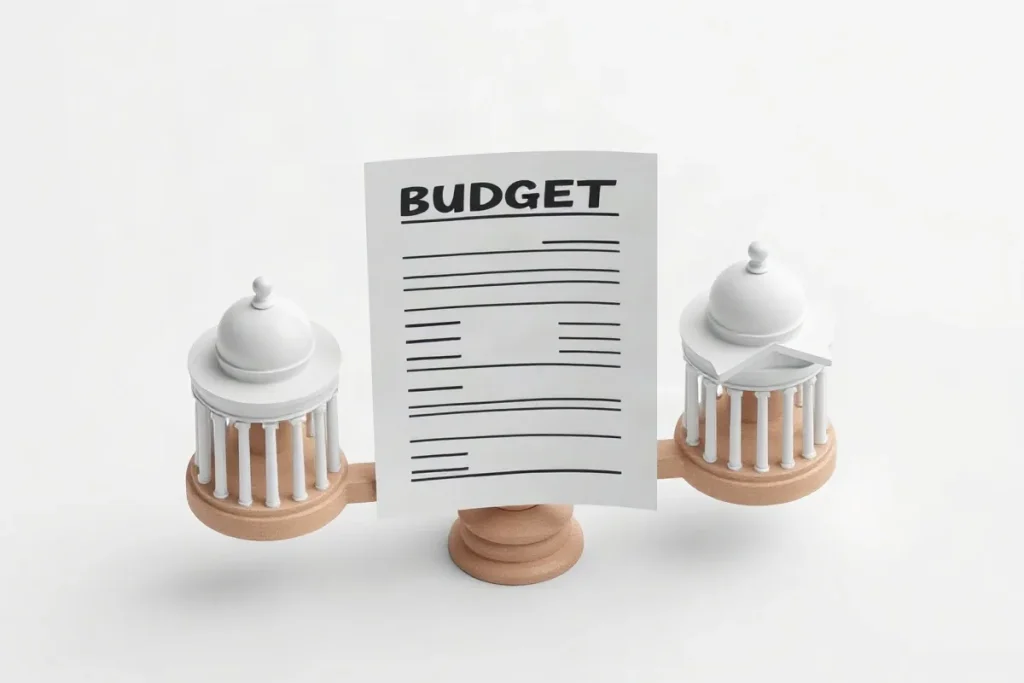
Why does bicameralism matter for budget decisions?
Bicameralism matters for budget decisions because it divides legislative authority between two chambers, typically the House of Representatives and the Senate, which requires negotiation and consensus to pass spending bills. This structure creates multiple checkpoints that can slow down or refine budget proposals, ensuring more thorough oversight and reducing unilateral fiscal power. In the U.S. Congress, for example, both chambers must agree on the budget, which balances diverse regional interests and institutional priorities before appropriations become law.
How does bicameral negotiation influence budget outcomes?
Budget negotiation in a bicameral legislature involves distinct strategic dynamics as each chamber represents different constituencies and interests. The House, with its 435 members apportioned by population, often pushes for budget priorities reflecting local district needs, while the Senate, with 100 members representing states equally, may emphasize broader or regional concerns.
Key negotiation factors
- House control: Fast-moving and more partisan with 2-year terms
- Senate control: Slower, with 6-year terms encouraging stability
- Conference committees: Reconcile bill differences between chambers
- Committee jurisdictions: Appropriations committees in each chamber shape spending
These factors ensure that the final budget incorporates compromises, often moderating extreme spending proposals. For instance, the 2026 federal budget negotiations saw extended talks due to disagreements between the House’s $1.7 trillion discretionary spending ceiling and the Senate’s preference for $1.6 trillion, illustrating how bicameral negotiation impacts final figures.
What role does bicameralism play in budget oversight?
Bicameralism enhances budget oversight by requiring separate review and approval processes in both chambers, creating multiple opportunities to scrutinize spending. The House Budget Committee and Senate Budget Committee each conduct hearings and revisions, while the Government Accountability Office (GAO) supports oversight by auditing budget implementation.
Oversight mechanisms enabled by bicameralism
- Separate committee hearings and markups
- Dual-chamber review of budget resolutions
- Joint conference committees for final agreement
- GAO audits and reports supporting congressional review
This layered scrutiny reduces risks of unchecked fiscal expansion or misallocation. For example, in 2026 the GAO noted delays in a $30 billion infrastructure fund due to conflicting House and Senate priorities, a direct consequence of bicameral oversight mechanisms.
How does bicameralism balance fiscal power between branches?
Bicameralism balances fiscal power by distributing legislative budget authority across two chambers, preventing concentration of influence in a single body. This balance complements the executive branch’s role, as the president proposes budgets but cannot appropriate funds without congressional approval from both chambers.
Checks and balances in U.S. budget process
- President proposes budget annually by first Monday in February
- House and Senate must each pass budget resolutions
- Appropriations bills require majority in both chambers
- Presidential veto possibility adds executive check
This division forces negotiation not only within Congress but also between Congress and the executive. In 2026, when President’s budget proposed $4.8 trillion in total spending, disagreements with the bicameral Congress led to a continuing resolution to maintain funding levels temporarily, showing the dynamic balance bicameralism imposes.
What are the main challenges bicameralism poses for budget efficiency?
While bicameralism improves fiscal oversight and balance, it can slow budget approval and create gridlock. The need for consensus between chambers often means prolonged negotiations and temporary funding measures.
Common efficiency challenges
- Conflicting priorities between chambers delaying passage
- Risk of government shutdowns without timely agreement
- Increased complexity of reconciling appropriations bills
- Potential for strategic obstruction by minority factions
For example, in 2026, the federal government operated under a continuing resolution for nearly 45 days due to a deadlock between the House’s spending caps and the Senate’s higher proposed ceilings. This shows how bicameralism, while designed for balance, can complicate timely budget decisions.
What options exist to mitigate bicameral budget gridlock?
Various procedural and institutional reforms aim to mitigate bicameral budget gridlock. These include streamlined reconciliation processes, increased use of bipartisan budget agreements, and deadlines enforced by automatic continuing resolutions.
Key mitigation strategies
- Budget reconciliation: Allows expedited consideration of deficit-related bills
- Biennial budgeting proposals to reduce annual conflicts
- Enforcing fiscal rules like the Budget Control Act spending caps
- Cross-chamber budget task forces for early negotiation
| Feature | House | Senate |
|---|---|---|
| Members | 435 | 100 |
| Term Length | 2 years | 6 years |
| Budget Committee | House Budget Committee | Senate Budget Committee |
| Appropriations Bills | 13 subcommittees | 12 subcommittees |
| Reconciliation Usage | Limited to deficit-related bills | Same as House |
- $1.7 trillion 2026 House discretionary spending ceiling proposal
- $1.6 trillion 2026 Senate discretionary spending ceiling preference
- 45 days length of continuing resolution in 2026 budget deadlock
Frequently asked questions
What is bicameralism in the U.S. Congress?
How does bicameralism affect the federal budget process?
Why can bicameralism cause budget delays?
What is budget reconciliation in Congress?
Key takeaways
- Bicameralism splits budget authority between two chambers, ensuring negotiation and oversight.
- House and Senate represent different constituencies, influencing budget priorities and outcomes.
- Oversight is strengthened by multiple committees and GAO involvement in both chambers.
- Fiscal power is balanced across Congress and the executive branch through bicameral approval and presidential veto.
- Bicameralism can cause budget delays and requires strategies to mitigate gridlock.
In conclusion, bicameralism fundamentally shapes the U.S. budget process by fostering negotiation, enhancing oversight, and balancing fiscal power between chambers and branches. While it can slow decision-making and cause temporary funding gaps, this structure ultimately promotes more deliberate and accountable budget decisions in Congress.
